
The Emergence of Data Collaboratives…in Numbers

Data Collaboratives are a new form of collaboration, beyond the public-private partnership model, in which participants from different sectors — including private companies, research institutions, and government agencies — can exchange data to help solve public problems. They range from the use of telecom data to inform urban planning to intelligence products illuminating economic trends developed with proprietary financial data to agricultural analyses generated through satellite imagery data.

The last two years, the GovLab has been identifying and documenting data collaboratives effort from around the world in its data collaborative repository.

The repository has become the most comprehensive mapping of data collaboratives worldwide.

Based upon this curated universe, we can extract best practices and lessons learned and translate these into a canvas on how to create new data collaboratives and address the existing hurdles facing data collaboratives effort.

Taking stock…in numbers

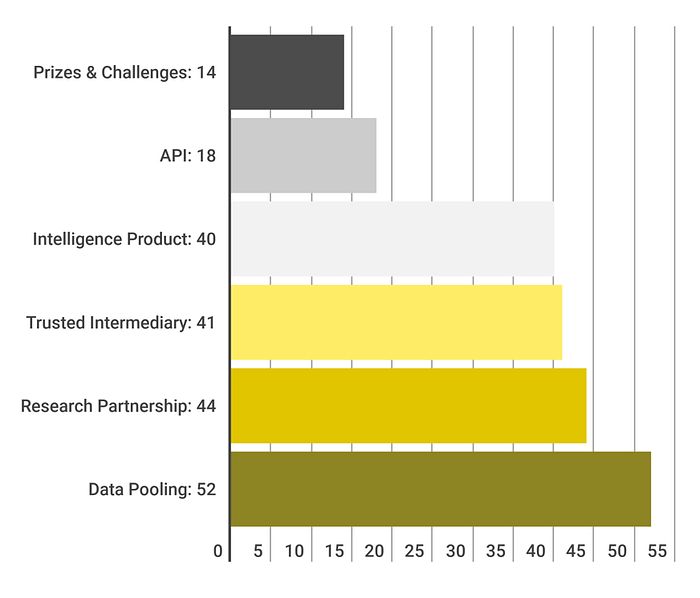
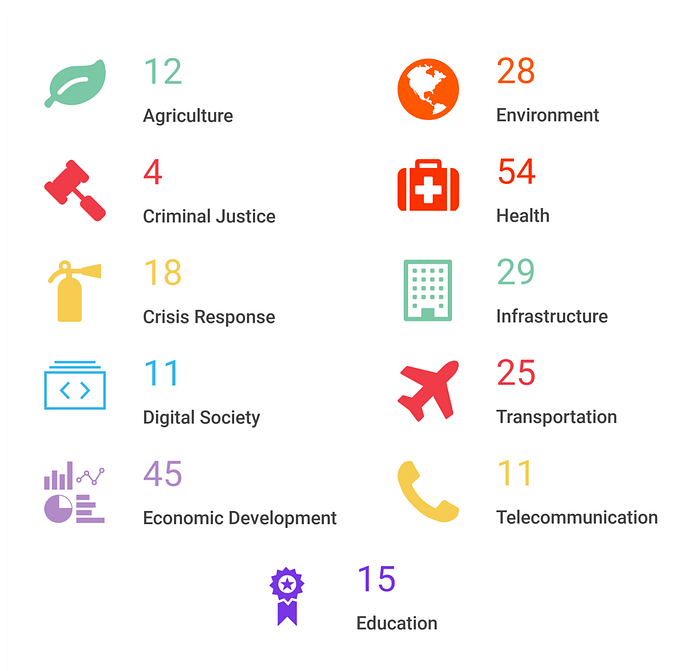
As of this blog update, we have identified and curated 145 data collaboratives examples in our repository, with the following breakdowns based on the type of collaboration, region, and sector. Detailed descriptions of each category can be found here.

Type of Collaboration


Region


Sector


Michelle Winowatan headshot

Author

Michelle Winowatan

Research Assistant

Michelle Winowatan is a Research Assistant at The GovLab, where she focuses on exploring the ways data and collaboration can improve policymaking. Previously, she has worked at several international nonprofit organizations, such as Search for Common Ground and Human Rights Watch, implementing projects that focused on conflict and human rights issues. She is a Fulbright awardee, through which she obtained her MPA in Public and Nonprofit Management and Policy from New York University. She also has a BA in International Relations from Universitas Pelita Harapan, in Indonesia.