Author
Children’s CrowdLaw: A Definitions Contest
By José Luis Martí
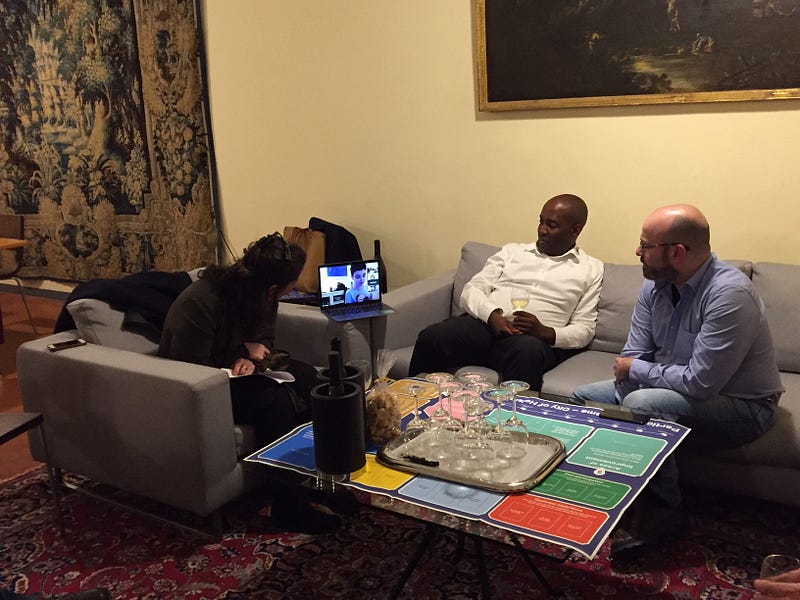
One of the funniest and most challenging activities we had in the three intense days in the Bellagio Rockefeller Center meeting on “Crowdlaw: People-Led Innovation in Urban Lawmaking” on March 13–17, 2018, was the following: We all had to write down a very short definition of Crowdlaw, to be understood by a smart child in the 8–10 years-old range. The activity took the form of a contest. Once issued our individual definitions, we had also to vote for those which we liked the most, being blind to their authorship. We could vote for our two preferred ones (one vote to each) or give two votes to our absolute winner.
How can you explain what Crowdlaw is to a kid in less than 100 words?
As one of the greatest challenges we faced during the meeting was precisely to make our minds about what Crowdlaw exactly was for each of us, and then, hopefully, get some agreement about it, trying to explain it in a few simple words to someone who is not even much familiar with politics, governance, or the idea of lawmaking itself, was a terrific exercise.
Children of 8 to 10 years are an amazing source of inspiration. They are terribly curious and pragmatic. They not only want to know everything, they also want to understand everything around them. They know enough about the world to become able to understand more and more complex ideas. They have quite an understanding of what is right and what is wrong, what good and what evil. They understand basic human motivations pretty well. And they add, to their usual previous passions for nature, human (architectural/urban) structures or basic interpersonal relationships, a fresh new fascination for social structures and institutions (be that the extended family, the communal life, the traffic regulations, the government, the army, the school, or a hospital). On the other hand, for good and for bad, they don’t know much about the complexity (or the context, or the history) of such social and institutional structures. They are unprejudiced about them, as about new innovative ideas. But they often underestimate the difficulties involved in institutional reform.
We produced 23 nice definitions. We can fairly say that none was bad. Some were pretty short (one of them had only three words), while others were substantially longer. Many tried to make comparisons between lawmaking and analogue situations in children’s daily life (school trips, family situations, playgrounds, classroom situations), while others tried to address directly the situation of a public decision-making. But they all made an effort to define Crowdlaw in very plain and accessible terms. In our own distribution of votes, the most popular definition was this:
CrowdLaw is being able to decide together what are the rules that define the activities that matter to all of us
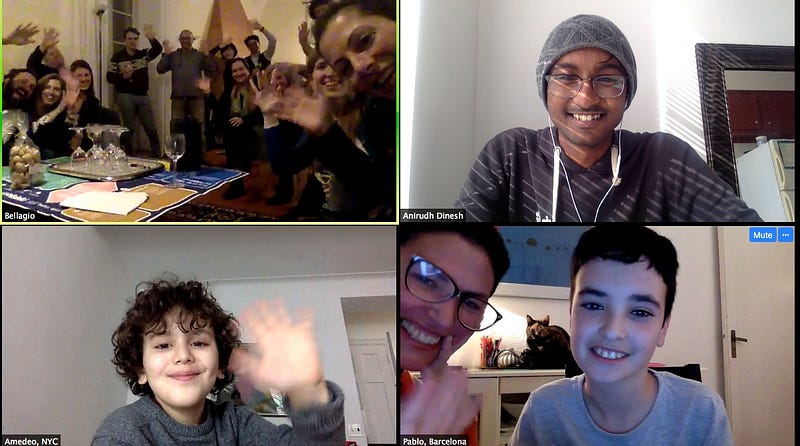
But that was not the end of it. At that point, we got to the most thrilling part of the contest. We counted with two exceptional and very tough young judges from two different countries, Amedeo (8 years-old) and Pablo (10 years-old), who carefully read and evaluated the 23 anonymous definitions, and chose their preferred three. And finally, much to the surprise of the participants in the contest, Amedeo and Pablo connected through video-conference to deliver their verdict, give the reasons for their choice, and congratulate the winner. And there was a winner; an absolute one. Very interestingly, especially because they had no time for previous secret deliberations and to reach an agreement, the two young judges came to choose the same definition out of the 23! The absolute winner of the definitions contest was this:
“Crowdlaw: Imagine you were able to propose and decide together with your classmates and teachers what to do in school each day? That’s how we think we should run our cities, too, with everyone having the ability to participate in deciding what problems to solve and how to solve them”.
The author of such definition, and therefore the contest’s winner, was Beth S. Noveck! Congratulations to her! (International observers guaranteed that there was no fraud in the judgment).
What did we learn from that experiment? Among other things, that a good definition, a definition that anyone can understand, must appeal to the reader’s experience, must avoid technical jargon, and must be simple enough (not oversimplifying, not patronizing).
If you want to test how such definition works with other 8–10 years-old or invite them to improve it, you will be more than welcome. Alternatively, you can also try to produce your own contests or comment on the 23 definitions we produced in the framework of this exercise (To leave a comment, select the text and click on the comments icon). Please, let us know about your results and opinions. So perhaps we will be collectively able to produce children’s crowdlaw.